
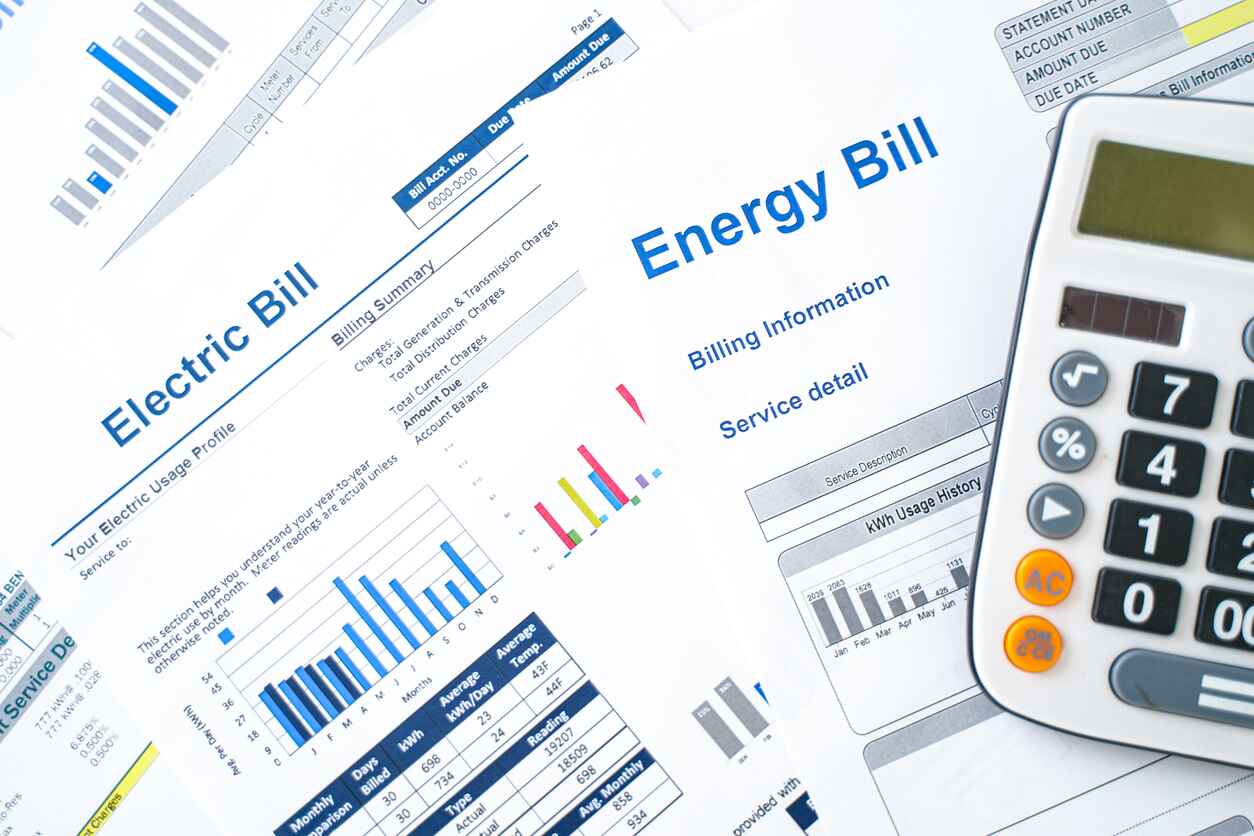
“Same temperature, higher bill – what changed?” It is a question that plagues building owners, facility managers, and operations directors month after month. You walk the halls, check the thermostats, and everything seems fine. The air is cool in July, warm in January, and your occupants are not complaining. Yet, your utility invoices tell a completely different, much more expensive story.
The harsh reality of commercial facility management is that heating, ventilation, and air conditioning (HVAC) systems often degrade in efficiency long before they outright fail. According to industry data, HVAC systems typically account for roughly 40% of a commercial building’s total energy consumption. When that massive chunk of your operational budget starts inflating, it quietly erodes your bottom line.
Most energy waste in commercial properties is completely invisible, developing gradually over the years of operation. Fortunately, because these costs are driven by specific operational blind spots, they are highly preventable. By implementing proactive operational strategies, routine HVAC maintenance, and smart energy efficiency tips for commercial HVAC infrastructure, you can regain control over your overhead.
1. Aging HVAC Equipment Losing Efficiency Over Time
Commercial HVAC infrastructure is built to last, but longevity does not guarantee peak performance. As heavy-duty machinery ages, mechanical components inevitably experience wear and tear. Motors, compressors, and heat exchangers must work significantly harder just to deliver the exact same thermal output they did a decade ago.
This gradual decline means that older legacy units often operate at a significantly lower efficiency floor than modern, high-efficiency equipment. While your internal environment remains comfortable, the utility meter outside is spinning at an accelerated rate to sustain that comfort.
Warning Signs Your Equipment Is Overworking:
- Longer Run Times: The system remains active for extended blocks of time to reach standard setpoints.
- Frequent Cycling: The compressor turns on and off rapidly, which consumes massive amounts of surge power.
- Rising Maintenance Calls: You find your team patching up the same rooftop units multiple times a season.
Commercial HVAC Efficiency Tip:
Track your equipment’s baseline energy data month-over-month. When utility consumption climbs without a corresponding change in weather, schedule an engineering life-cycle assessment to determine if retrofitting components is more cost-effective than constant repairs.
2. Dirty Coils, Filters, and Internal Components Restricting Airflow
Among the most common hidden causes of skyrocketing commercial utility bills is simple, physical airflow restriction. An HVAC system is fundamentally an air-exchange loop. When dust, dirt, and airborne debris accumulate on internal components, they act as an insulating blanket that chokes the system’s ability to breathe.
Dirty evaporator and condenser coils drastically reduce heat transfer efficiency, forcing the refrigeration cycle to run longer to extract heat. Simultaneously, clogged air filters force supply fans to pull more brake horsepower to push conditioned air through dense particulate buildup.
Even a microscopic layer of dust buildup on a condenser coil can reduce its heat transfer efficiency by double-digit percentages. The system ends up consuming substantially more kilowatt-hours per degree of cooling delivered to the building envelope.
Commercial HVAC Efficiency Tip:
Establish a strict schedule to replace pleated air filters every 2 to 3 months depending on occupancy levels. Additionally, mandate a professional chemical coil cleaning at least once a year—ideally right before the high-demand summer cooling season hits.
3. Poor or Inconsistent Preventive Maintenance Programs
Running a commercial facility on a “run-to-fail” operational model is a guaranteed recipe for financial strain. A total lack of scheduled, structured maintenance leads to a slow, compounding decline in system health. When professional technicians do not regularly inspect your infrastructure, small mechanical issues quietly multiply. Think of maintenance neglect as a “small problems stacking up” effect over months and years.
| Maintenance Element | Consequence of Neglect |
| Belts and Bearings | Worn components cause friction, forcing motors to draw excess amperage. |
| Refrigerant Levels | Low charge makes compressors work twice as hard to cool the air. |
| Mechanical Connections | Loose electrical terminals create voltage drops and energy waste. |
Commercial HVAC Efficiency Tip:
Transition your facility away from reactive maintenance to a quarterly planned maintenance agreement. Catching small alignment issues, loose connections, or minor leaks early prevents systemic efficiency drops.
4. Improper System Sizing (Oversized or Undersized Units)
More power is not always better when it comes to mechanical engineering. A surprisingly large number of commercial spaces suffer from improperly sized HVAC equipment, often stemming from poor initial building designs or undocumented space retrofits.
An oversized system suffers from a phenomenon known as short-cycling. The massive unit blasts the space with conditioned air, satisfies the thermostat in minutes, and shuts down, only to turn back on moments later. Because electric motors draw peak current during startup, this constant stopping and starting causes massive energy spikes.
Conversely, an undersized system lacks the capacity to handle the structural load. It will run continuously throughout the day, consuming maximum power while still failing to achieve tenant comfort. Both scenarios lead to highly inefficient energy usage, uneven building temperatures, and accelerated mechanical wear-and-tear.
Commercial HVAC Efficiency Tip:
Never let a contractor replace an old unit with the exact same tonnage by default. Insist on a formal commercial load calculation (such as an ACCA Manual N calculation) to verify the current heating and cooling demands of the property before making any hardware changes.
5. Faulty Controls, Sensors, and Poor Programming
Your HVAC hardware is only as smart as the control system directing it. In modern facilities, energy waste is frequently traced back to faulty sensors, outdated thermostats, or broken programming logic within a Building Automation System (BAS).
When environmental sensors experience calibration drift, they report incorrect data to the primary controller. A sensor that reads the room as two degrees warmer than it actually is will trigger unnecessary cooling cycles.
Common Automation and Control Flaws:
- Active Manual Overrides: A technician overrides a schedule for a one-time evening event, and the system is accidentally left running 24/7 for months.
- Outdated Schedules: The building’s operational hours change, but the HVAC system continues conditioning empty zones at 2:00 AM.
- Aggressive Setpoints: Setting cooling targets too low or heating targets too high forces systems into their most energy-intensive operational tiers.
Without routine validation of your control sequences, your system will waste thousands of dollars conditioning completely empty rooms.
Commercial HVAC Efficiency Tip:
Implement a bi-annual calibration check on all zone temperature and humidity sensors. Within your BAS, program automated logic that purges manual temperature overrides and returns the system to standard occupied/unoccupied schedules after a maximum of 4 hours.
6. Simultaneous Heating and Cooling Waste
One of the most expensive operational errors in commercial real estate is simultaneous heating and cooling. This occurs when the HVAC infrastructure is actively warming one zone of a building while simultaneously cooling an adjacent area or worse, fighting itself within the exact same air handling unit.
This issue is typically born from poorly calibrated controls, conflicting local thermostat settings, or damaged mixing dampers in Variable Air Volume (VAV) boxes.
Why This Is a Hidden Budget Killer: Because the air blowing out of the diffusers eventually mixes to create a “normal” temperature, occupants rarely complain. The indoor comfort feels perfectly fine, hiding the fact that your boilers and chillers are actively engaged in an expensive tug-of-war.
Commercial HVAC Efficiency Tip:
Program a mandatory deadband of at least 5°F between your heating and cooling setpoints within your central control system. This ensures that a zone must drift completely out of the neutral comfort window before the opposing heating or cooling mode is allowed to engage.
7. Air Leaks, Duct Issues, and Poor Building Envelope Efficiency
You can own the most efficient mechanical plant in the world, but if your building envelope or distribution network is compromised, your money is leaking into the atmosphere. Ductwork issues are an incredibly common culprit for unexpected energy waste.
When supply ducts develop cracks, unsealed seams, or disconnected joints, conditioned air escapes into drop ceilings, mechanical shafts, or crawlspaces. This forces the central HVAC system to overproduce conditioned air just to get the required volume to the actual occupied spaces.
Furthermore, a poor building envelope, characterized by degraded window caulking, worn weatherstripping, and thin insulation, allows outdoor humidity and unconditioned air to freely infiltrate the property. Your HVAC system must work twice as hard to combat this constant external thermal loading.
Commercial HVAC Efficiency Tip:
Have a professional team perform regular commercial duct inspection and smoke testing to seal leaks. Pair this with a facility walkthrough to upgrade weatherstripping and seal penetrations on all exterior building envelopes.
8. Rising Operational Demand and Changing Building Usage
Buildings are dynamic environments that evolve over time. However, the commercial HVAC infrastructure layout is rarely updated to match those shifting internal dynamics.
If a floor plan that was originally designed for low-density storage is converted into a high-density corporate call center, the cooling load shifts dramatically. More human occupants mean more body heat, higher carbon dioxide levels, and increased moisture.
Similarly, adding heat-generating office equipment, server enclosures, or extended operational shifts increases the baseline cooling demand. When building usage changes without a corresponding recalibration of the HVAC system’s air balancing and programming, the entire system operates in a highly inefficient, strained state.
Commercial HVAC Efficiency Tip:
Whenever you undergo an office layout change or a tenant improvement (TI) project, perform a full system air balancing test. Adjust the cubic feet per minute (CFM) delivery settings to match the new occupant density and equipment distribution.
9. Lack of Modern Energy-Efficient Upgrades
Technology moves fast, and legacy commercial HVAC systems simply lack the architectural features designed for modern energy management. Traditional, constant-speed motors and fans operate at a binary 0% or 100% capacity, meaning they draw maximum power even when a zone only requires a minor thermal adjustment.
| Legacy Component | Modern High-Efficiency Upgrade |
| Constant-Speed Fan Motors | Variable Frequency Drives (VFDs) that match motor speed to exact real-time demand. |
| Single-Stage Compressors | Modulating/Multi-Stage Compressors that scale power draw smoothly. |
| Manual Thermostats | Smart, AI-Driven Building Automation Systems (BAS). |
Choosing to forego modernization options means leaving significant money on the table. Upgrading aging infrastructure with smart retrofits and VFDs regularly delivers a 20% to 40% reduction in commercial energy profiles, making it one of the most reliable capital improvement investments available.
Commercial HVAC Efficiency Tip:
Prioritize high-ROI retrofits first. If upgrading an entire rooftop unit isn’t in this year’s capital budget, look into installing Variable Frequency Drives (VFDs) on your existing constant-speed supply and return fans to scale power use smoothly.
High Energy Bills Are Usually a Systemic Issue, Not a Single Failure
When your commercial energy bills surge, it is rarely the result of a single, catastrophic equipment breakdown. Instead, rising utility costs are almost always driven by a layered web of minor inefficiencies: a dirty coil here, a drifted sensor there, a forgotten schedule, and an aging motor working just a bit harder than it should.
The comfort inside your facility doesn’t change, but your operational efficiency quietly does. Fortunately, you can stop this invisible cash drain through structured operational choices:
- Implement a rigorous, document-backed preventive maintenance schedule.
- Conduct routine building automation system audits to wipe out schedule creeps.
- Invest in targeted mechanical modernizations.
By partnering with the experts at Viking Mechanical, we can identify, diagnose, and eliminate your facility’s hidden energy drains before they impact your quarterly performance.